

Precision non-standard parts machining refers to the fact that in practical applications, precision parts must have higher accuracy and more delicate appearance in order to better reflect the machining capability and quality. This article will discuss the topic of precision non-standard parts machining process to help readers understand how to choose the appropriate machining method, coarse and fine benchmarks, machining sequence, machining allowances, etc., so as to improve machining efficiency, accuracy and quality.
I. Part Design
1. assess customer needs and part design requirements: in non-standard parts processing, physical dimensions, material properties, functional requirements and other necessary factors must be determined as accurately as possible.
2. Selection of suitable materials: According to the function and requirements of the part, select suitable materials, such as metals, plastics, ceramics, etc. 3.
3. design the structure of the part: according to the function and requirements of the part, design the structure of the part, including the shape, size, accuracy, etc..
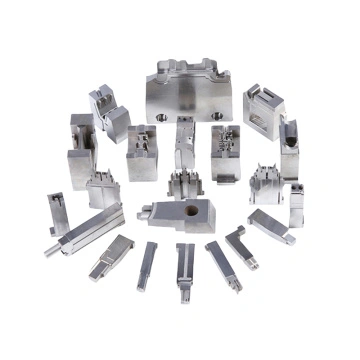
4. Design the machining process of the parts: according to the structure and material of the parts, design the machining process of the parts, including machining methods, machining sequence, machining allowance, etc..
Second, parts processing
1. select the appropriate processing equipment: according to the structure and material of the parts, select the appropriate processing equipment, such as CNC machine tools, laser cutting machines, 3D printers, etc..
2. formulate processing technology: according to the structure and material of the parts, formulate the processing technology, including processing methods, processing order, processing allowance, etc..
3. Machining parts: according to the formulated machining process, machining parts to ensure that the size, accuracy and surface quality of the parts meet the requirements.
4. Inspection of parts: After machining is completed, the parts are inspected to ensure that the size, accuracy and surface quality of the parts meet the requirements.
Third, parts assembly
1. choose suitable assembly equipment: according to the structure and requirements of the parts, choose suitable assembly equipment, such as assembly robots, automatic assembly lines, etc.
2. Formulate the assembly process: according to the structure and requirements of the parts, formulate the assembly process, including assembly methods, assembly sequence, assembly margins, etc. 3.
3. assembly parts: according to the formulation of the assembly process, assembly parts, to ensure that the assembly accuracy and assembly quality of the parts meet the requirements.
4. Inspection of assembly quality: After the assembly is completed, the parts are inspected to ensure that the assembly precision and assembly quality of the parts meet the requirements.
Four, parts testing
1. choose suitable test equipment: according to the function and requirements of the parts, choose suitable test equipment, such as test instruments, test equipment and so on.
2. formulate test process: according to the function and requirements of the parts, formulate the test process, including test methods, test sequence, test margins, etc.
3. Test the parts: according to the formulated test process, test the parts to ensure that the function and performance of the parts meet the requirements.
4. Inspection of test results: After the test is completed, the test results are inspected to ensure the accuracy and reliability of the test results.
V. Parts Packaging
1. Select suitable packaging materials: according to the characteristics and requirements of the parts, select suitable packaging materials, such as cardboard boxes, foam, bubble film, etc. 2.
2. Formulate the packaging process: According to the characteristics and requirements of the parts, formulate the packaging process, including packaging methods, packaging order, packaging margin, etc. 3.
3. Packaging parts: according to the formulation of the packaging process, packaging parts, to ensure that the quality of packaging parts and packaging safety in line with the requirements.
4. Inspection of packaging quality: after the completion of packaging, inspection of the parts to ensure that the quality of packaging and packaging safety of the parts to meet the requirements.
Sixth, parts delivery
1. Select the appropriate delivery method: According to the characteristics and requirements of the parts, select the appropriate delivery method, such as express delivery, logistics, self-pickup, etc. 2.
2. formulate the delivery process: according to the characteristics and requirements of the parts, the development of the delivery process, including the delivery method, delivery order, delivery margins, etc..
3. Deliver the parts: According to the formulated delivery process, deliver the parts to ensure that the delivery quality and delivery safety of the parts meet the requirements.
4. Inspection of delivery quality: After the delivery is completed, the parts are inspected to ensure that the delivery quality and delivery safety of the parts meet the requirements.